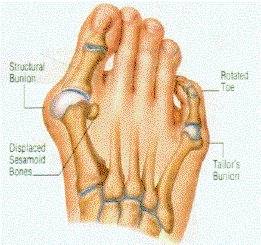
One of the more common conditions treated by podiatric surgeons is the painful bunion. Patients with this condition will usually complain of pain when wearing certain shoes, especially snug fitting dress shoes, or with physical activity, such as walking or running.
The most common symptoms associated with this condition are pain on the side of the foot. Shoes will typically aggravate bunions. Stiff leather shoes or shoes with a tapered toe box are the prime offenders. This is why bunion pain is most common in women whose shoes have a pointed toe box. The bunion site will often be slightly swollen and red from the constant rubbing and irritation of a shoe. Occasionally, corns can develop between the 1st and 2nd toe from the pressure the toes rubbing against each other. On rare occasions, the joint itself can be acutely inflamed from the development of a sac of fluid over the bunion called a bursa. This is designed to protect and cushion the bone. However, it can become acutely inflamed, a condition referred to as bursitis.
Bunions are most commonly treated by conservative means. This may involve shoe gear modification, padding and orthoses. When this fails to provide adequate relief, surgery is often recommended. There are several surgical procedures to correct bunions. Selection of the most appropriate procedure for each patient requires knowledge of the level of deformity, review of the x-rays and an open discussion of the goals of the surgical procedure. Almost all surgical procedures require cutting and repositioning the first metatarsal. In the case of mild to moderate bunion deformities the bone cut is most often performed at the neck of the metatarsal (near the joint).


No comments:
Post a Comment